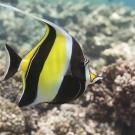
Some reef fish have the unexpected ability to move their jaws from side to side, biologists at the University of California, Davis have discovered. This ability – which is rare among vertebrate animals – allows these fish to feed rapidly and efficiently on algae growing on rocks. The work is published May 5 in Proceedings of the National Academy of Sciences.
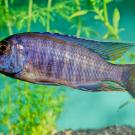
It’s not what you do, it’s how readily you do it. Rapid evolutionary change might have more to do with how easily a key innovation can be gained or lost rather than with the innovation itself, according to new work by biologists at the University of California, Davis, who studied how teeth in certain fishes evolved in response to food sources and habitats.
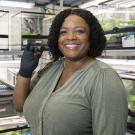
Victoria Watson-Zink, Ph.D. ’22, a postdoctoral evolutionary marine biologist, received the Howard Hughes Medical Institute’s Hanna H. Gray Fellowship last month. This year’s fellowship supports the transition of 25 early-career scientists to leading labs and becoming tenured faculty.
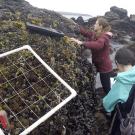
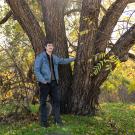
A mussel bed along Northern California’s Dillon Beach is as healthy and biodiverse as it was about 80 years ago, when two young students surveyed it shortly before Pearl Harbor was attacked and one was sent to fight in World War II.
The genetics behind the alternating sexes of walnut trees has been revealed by biologists at the University of California, Davis. The research, published Jan. 3 in Science, reveals a mechanism that has been stable in walnuts and their ancestors going back 40 million years — and which has some parallels to sex determination in humans and other animals.
Sam Arcement—Director of Graduate Academic Programs for the College of Biological Sciences, and the program coordinator for the Molecular, Cellular, and Integrative Physiology (MCIP) Graduate Group—has been honored with the 2024 Outstanding Graduate Program Coordinator Award from the Office of Graduate Studies. This year saw a record number of nominations. “Sam tirelessly ensures that our needs and concerns are heard and addressed,” said one MCIP student, who praised Arcement’s dedication to student advocacy.
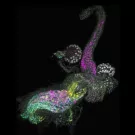
You have likely not spent much time thinking about the uterus of the fruit fly, Drosophila melanogaster. But then, neither have most scientists, even though Drosophila is one of the most thoroughly studied lab animals. Now a team of biologists at the University of California, Davis, has taken the first deep look at the Drosophila uterus and found some surprises, which could have implications not just for understanding insect reproduction and potentially, pest control, but also for understanding fertility in humans.
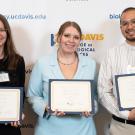
The college is proud to announce the recipients of the 2024 CBS Faculty Teaching and Research Awards. These two prestigious awards honor faculty members who have demonstrated exceptional dedication to teaching and research, and highlight the integral role each plays in advancing the frontiers of biological sciences.
Each year the college recognizes the importance of mentorship in the continued growth of both the undergraduate and graduate communities by awarding CBS Dean’s Mentorship Awards to graduate students. Funded by contributions to the CBS Dean’s Circle, the awards are open by faculty nomination to graduate students who have played a significant role in the growth and development of the younger generation of scientists.
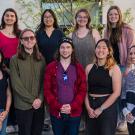
The UC Davis College of Biological Sciences champions Diversity, Equity, Inclusion, and Justice (DEIJ) through the Graduate Student DEIJ Leader Fellowship program. Now in its second year, the program empowers enterprising graduate students committed to enhancing DEIJ within the CBS community by supporting projects aimed at fostering a more inclusive academic environment.