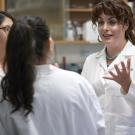
For Associate Professor Rebecca Calisi Rodríguez, parental behavior has inspired her research as a biological scientist, as well as her public advocacy message.
Calisi Rodríguez studies the hormonal shifts that occur in numerous species because of parental instincts. She also is passionate about encouraging the scientific community to be more supportive and accepting of diversity in STEM (science, technology, engineering and math) careers, especially for those who are mothers.
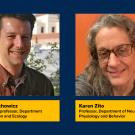
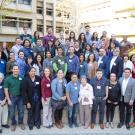
Nine faculty from UC Davis are among 564 newly elected fellows of the American Association for the Advancement of Science, announced today (Jan. 26). AAAS fellows are scientists, engineers and innovators who have been recognized for their achievements across disciplines ranging from research, teaching and technology, to administration in academia, industry and government, to excellence in communicating and interpreting science to the public.
Here are the new fellows from CBS, listed with their AAAS commendations:
For the 2021-2022 academic year, the college is proud to welcome three new members to its faculty. Below you’ll learn more about the research interest of each faculty member, and what brought them to UC Davis.
Xiaomo Chen
Xiaomo Chen joined the Department of Neurobiology, Physiology and Behavior as an assistant professor in September 2021. Before joining the UC Davis faculty, she was a postdoctoral fellow at Stanford University.
In the second year of this program, Chancellor Gary S. May and academic leadership selected five fellows, four from the Academic Senate and one from the Academic Federation. Each fellow has received $5,000 in academic enrichment funds.
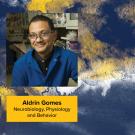
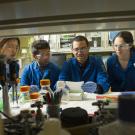
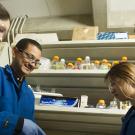
Aldrin Gomes, a professor in the Department of Neurobiology, Physiology and Behavior, is interested in how commonly used drugs like ibuprofen affect the heart. His lab has helped advance our understanding of how commonly used drugs damage our cells, and has recently been recognized for an exceptional commitment to safety.
Aldrin Gomes, a professor in the Departments of Neurobiology, Physiology and Behavior, and Physiology and Membrane Biology, can still recall the reality he faced when he came to the United States to conduct postdoctoral research. Growing up in Trinidad and Tobago, Gomes was accustomed to the cultural diversity of the island. But shortly after stepping on American soil, he started experiencing things he didn’t understand.
While attending the UC Davis College of Biological Sciences, alum Arik Davidyan investigated testosterone’s role in muscle mass gain, maintenance and decay, using mice as experimental models.
In a study appearing in Endocrinology, Associate Professor Karen Ryan and her colleagues identified the hormone fibroblast growth factor-21 (FGF21) as a control for regulating dietary protein intake in male mice. They found that male mice injected with the hormone increased their intake of dietary protein over carbohydrates and fats.
For 30 years, the Biology Undergraduate Scholars Program has created opportunities in life sciences education and research for over 1,500 students. Over the Picnic Day weekend, BUSP friends and alumni celebrated the program.
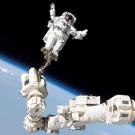
NASA has invested millions of dollars in UC Davis research, working with UC Davis biologists, engineers, physiologists, psychologists and other researchers to study life in space — whether that be studying space itself, the effects of gravity, getting there, staying there or surviving there.