A nerve cell resembles a vast tree with branches that communicate with thousands of other cells. To function, it depends on a motor protein that walks on two legs, hauling urgent cargo from the center of the cell to the faraway tips of every branch. Scientists have unveiled a new structure of this walking protein, showing how cells control it.
Sean Burgess, a professor of molecular and cellular biology whose research has advanced understanding of chromosome inheritance, reproductive biology and human developmental disorders, has been named chair of the Department of Molecular and Cellular Biology (MCB). She will begin serving in the role on September 1.
Thousands of times per year, a family’s moment of joy turns to unexpected grief. A seemingly healthy infant stops smiling or making eye contact. Their limbs grow weak. The tiny child suffers seizures and breathing problems.
Jawdat Al-Bassam, an associate professor of molecular and cellular biology at the University of California, Davis, often hears from these families. “I’ve gotten emails from folks all over the world,” he said.
For Mark Winey, the path into biology was deeply personal from the start. Watching his sister live with an inherited metabolic disease sparked a curiosity about genetics that would shape his entire career.
He is this month’s guest on Face to Face With Chancellor May.
Now a Distinguished Professor in the Department of Molecular and Cellular Biology, and dean of the College of Biological Sciences, Winey reflects on a journey shaped by both personal motivation and professional passion.
It’s not often that a Nobel laureate visits a UC Davis undergraduate classroom, but this year, a biochemistry class in Kleiber Hall struck “gold”—twice.
Not one, but two Nobel laureates chronicled their scientific careers and answered questions during their virtual visits to UC Davis Distinguished Professor Walter Leal’s winter quarter class, “Structure and Function of Biomolecules.”
Fourth-year biological sciences major and Barry Goldwater Scholar recipient Azucena Virgen studies the regenerative biology of Hydra — a freshwater organism known for its ability to regrow entire body parts — at the UC Davis Juliano Lab. What began as a fascination in a high school biology class in her hometown of Woodland, California, grew into a long-term goal to lead a research lab
Can the bend of a banana give us insight into cancer? What does the shape of a rice grain have to do with infertility? The proteins that give plants their shape and structure are also involved in human disease. A team led by researchers at the University of California, Davis, has mapped out the structure of a key player, augmin, in exhaustive detail.
There are many ways to communicate with prospective romantic partners: If you are a Japanese scarab beetle, it’s a matter of distinguishing left from right. New work from U.S. and Chinese scientists, published this week in Proceedings of the National Academy of Sciences, shows how these beetles use mirror-image pheromones to find a mate. The work could lead to better monitoring and control of significant agricultural pests.
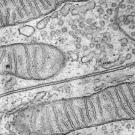
Inside our cells are tiny engines that supply the energy to sustain life. These protein machines essentially burn our food – producing CO2 and harnessing the energy that is released to sustain growth, movement and even thought.
Each year, roughly 1.6 million people worldwide are born with genetic diseases that disrupt these tiny cellular engines – making life difficult.
“Mutations in these protein complexes are really devastating, and often lethal,” says James Letts, an associate professor of molecular and cellular biology.