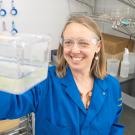
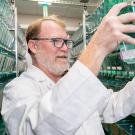
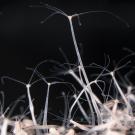
Celina Juliano, an associate professor of molecular and cellular biology who studies the regenerative capabilities of Hydra vulgaris, a small, freshwater relative of the jellyfish, has been named a UC Davis Chancellor's Fellow. This year's fellows are experts in everything from linguistics to law, from the economics of climate change to the reliability of software. These nine faculty members — eight associate professors and one professor — are UC Davis’ newest class of Chancellor’s Fellows, a title given to early career academics doing exemplary work.
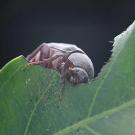
Life on Earth runs on a 24-hour cycle as the planet turns. Animals and plants have built-in circadian clocks that synchronize metabolism and behavior to this daily cycle. But one beetle is out of sync with the rest of nature.
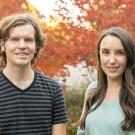
Ben Cox and Rebecca McGillivary, postdoctoral researchers in the Department of Molecular and Cellular Biology, are among 10 early career scientists selected to receive 2022 Hartwell Biomedical Research Fellowships, which were announced in August, 2023.
The Hartwell Foundation, which supports innovative and cutting-edge biomedical research that may benefit children, provides fellows with $100,000 in funding, split between two years.
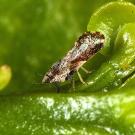
A failed field test has led to a major discovery about the Asian citrus psyllid, the insect that spreads the devastating citrus greening disease. According to new research, the bacteria that cause citrus greening can interfere with the insect’s sense of smell, rendering some kinds of insect traps useless. The work is currently available as a preprint.
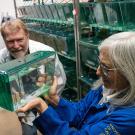
Female zebrafish (Danio rerio) have an unusual tendency: if their egg cells are damaged, they can turn into males. Bruce Draper, a professor in the Department of Molecular and Cellular Biology (MCB) and Florence Marlow, a professor at the Icahn School of Medicine at Mount Sinai, have discovered that immune cells called macrophages play a key role in this process. These cells normally keep things “tidy” by removing dead or damaged cells – but in zebrafish they can also remodel the ovaries into sperm-producing testes. “It’s a pretty interesting and novel idea,” says Draper.
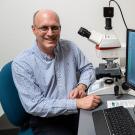
Dan Starr, a cell biologist and professor in the Department of Molecular and Cellular Biology, has been named the new Associate Dean of Research for the College of Biological Sciences. He will step into the role on October 1, 2023.
“I see this position as an opportunity to encourage my colleagues to branch out and expand into new research areas,” said Starr. “Our research portfolio at CBS is already very strong. My goal is to build on our successes and to support future growth in our research programs.”
Birth defects related to chromosomal abnormalities often stem from exposure to chemicals early in the mother’s life. But determining which chemicals are at fault poses a serious challenge — akin to solving a hit-and-run case, decades after the fact. Two College of Biological Sciences researchers are developing a method that could identify harmful chemicals far more quickly, with the help of red- and green-glowing zebrafish.
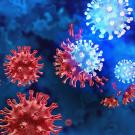
An artificial intelligence model has successfully identified coronaviruses capable of infecting humans, out of the thousands of viruses that circulate in wild animals. The model, developed by a team of biologists, mathematicians and physicists at the University of California, Davis, could be used in surveillance for new pandemic threats. The work was published June 8 in Scientific Reports.
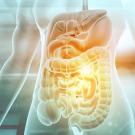
Using a specially designed capsule, researchers can now voyage through the digestive system, collecting new data about digestion and microorganisms. The work by a team including researchers at the University of California, Davis, Stanford University and Envivo Bio Inc., is published May 10 in papers in Nature and Nature Metabolism.
The Greek hero Heracles fought a monster called the Hydra, which grew two new heads for each one he lopped off. Heracles was lucky he wasn’t fighting something with the regenerative ability of the real Hydra, which can re-grow its entire body from a few hundred cells. This simple water animal is helping scientists explore how some animals can regrow missing body parts.