The UC Davis College of Biological Sciences champions Diversity, Equity, Inclusion, and Justice (DEIJ) through the Graduate Student DEIJ Leader Fellowship program. Now in its second year, the program empowers enterprising graduate students committed to enhancing DEIJ within the CBS community by supporting projects aimed at fostering a more inclusive academic environment.
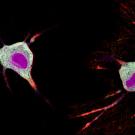
Researchers in the College of Biological Sciences have received a grant to study the role of the cerebellum in autism. “We need a more holistic understanding of the brain circuits that drive this disorder,” says Alex Nord, an associate professor of neurobiology, physiology and behavior (NPB), and a researcher at the Center for Neuroscience (CNS). “The cerebellum is a key component that has been largely overlooked until recently.”
Our understanding of schizophrenia has increased greatly in recent years, as studies of large groups of people have identified a multitude of genetic variants that increase a person’s risk of the disease. But each of those individual risk factors accounts for “only a very minor amount of the overall risk,” said Alex Nord, a professor of neurobiology, physiology and behavior in the College of Biological Sciences and the Center for Neuroscience.
Charan Ranganath admits he can be forgetful. This is true of most people, but most people are not leading experts on the neuroscience of human memory.
“Everybody knows I have a terrible memory,” said Ranganath, a professor of psychology and neuroscience at UC Davis, “and yet I got a Ph.D. and I publish papers all the time. I'm totally functional, so maybe the expectations we have are just wrong.”
When it comes to brain anatomy, the thalamus occupies a humble position. It sits at the top of our brainstem — an apparent vestige of our reptilian past — and is dwarfed by the massive, wrinkled cerebral cortex, which sits above it. The cortex is often credited as the throne of human intellect. But a team of researchers across the country, with UC Davis led by W. Martin Usrey, sees the thalamus as a critical coordinator of our thoughts and perceptions – and pivotal in human disease.
Christina Kim, a faculty member in the Center for Neuroscience and an assistant professor in the UC Davis Department of Neurology, has been selected as a 2023 NIH Director’s New Innovator Award recipient. The award, announced last month, is part of the NIH Common Fund’s High-Risk, High-Reward Research program.
These questions, among others, occupy the mind of Charan Ranganath, a UC Davis psychology professor in the UC Davis College of Letters and Science and a core faculty member with the Center for Neuroscience. But the transient nature of memory isn’t just a focal point of Ranganath’s research. It’s something that he, like the rest of us, deals with daily.
“As a memory researcher, the most common question that I get in my everyday life is, ‘Why am I so forgetful?’” Ranganath said.
Wilsaan Joiner, a professor in the Department of Neurobiology, Physiology and Behavior, was among this year’s cohort of Chancellor’s Fellows.
“Our newest fellows represent the very best of UC Davis and I congratulate them,” Chancellor Gary S. May said in announcing the new fellows. “The knowledge, expertise and excellence these faculty demonstrate across a range of disciplines positively impacts our university’s mission of research, teaching and public service.”
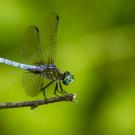
Despite their small size, dragonflies are arguably one of the most impressive predators in the animal kingdom. According to Rachel Crane, a biologist at the University of California Davis, dragonflies often catch up to 95% of the prey they go after, a rate she described as “wildly high compared to where most predators are.”
More incredible still, this prey capture all happens in midair.
“Dragonflies are doing these really, really fast, high-speed aerial captures,” said Crane.