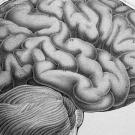
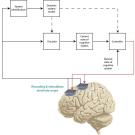
People love stories. We find it easier to remember events when they are part of an overarching narrative. But in real life, the chapters of a story don’t follow smoothly one from another. Other things happen in between. A new brain imaging study from the Center for Neuroscience at the University of California, Davis, shows that the hippocampus is the brain’s storyteller, connecting separate, distant events into a single narrative. The work is published Sept. 29 in Current Biology.
Four UC Davis postbaccalaureate researchers returned to campus this fall as both graduate students and fellows of the prestigious National Science Foundation (NSF) Graduate Research Fellowship Program (GRFP). The NSF GRFP supports outstanding scholars in STEM fields, providing a three-year annual stipend of $34,000 along with a $12,000 cost of education allowance for tuition and fees.
Opioids are powerful painkillers but their use is hindered because patients become tolerant to them, requiring higher and higher doses, and overdoses can cause respiratory depression and death. A recent study from researchers at the UC Davis Center for Neuroscience contradicts existing thinking about how opioid drugs cause tolerance and respiratory depression, and suggests a new, balanced approach to developing safer analgesics. The work was published July 13 in Neuropsychopharmacology.
We watch a ball as it falls into our glove. We hear a strange sound in another part of the house and listen intently. In neuroscience, the act of narrowing our senses in response to an environmental event is called “attention,” and it is understood that when we attend to a stimulus, we lose the ability to focus on other surrounding inputs.
The University of California, Davis, today named the recipients of the 2021 Chancellor’s Innovation Awards. The awards recognize faculty, project teams and community partners for their work, dedication and success in improving the lives of others and addressing the needs of our global society through innovative solutions. David E.
While drugs help patients mitigate the most extreme conditions of mental illnesses like schizophrenia or depression, they often don’t address the cognitive deficits many diseases cause, such as memory loss, low attention span and impaired decision-making.
Mechanical and aerospace engineering (MAE) professor Steve Robinson, assistant professor Jonathon Schofield, and Neurobiology, Physiology and Behavior (NPB) associate professor Wilsaan Joiner are teaming up in a new four-year, $1.3 million NASA-funded project to study different visual and haptic strategies to help astronauts more safely and precisely operate ro
The National Institute of Mental Health (NIMH) has awarded a $15.7 million grant to the UC DavisSilvio O. Conte Center, one of only 15 Conte Centers nationwide.
Psychiatric illnesses and neurodevelopmental disorders, including schizophrenia, affect 15-20 percent of the population worldwide, yet current treatments are at best only partially effective. The UC Davis Conte Center was first established in 2016 through the Center for Neuroscience to determine how maternal infection increases risk for these disorders and to identify new targets for novel treatments.
Neuroscience Graduate Group student Jaleel Jefferson investigates the neuropathology of a condition known as HIV Associated Neurocognitive Disorders (HAND), which encompasses “a spectrum of cognitive, motor, and/or mood problems” that affect people with HIV. In this Science Snapshot, he walks us through some neuronal imagery and shares some of his path to science.