Student Researchers

What Makes Seagrass Survive? Look to the Microbes


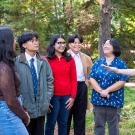
On her first day of graduate school, Karolina Zabinski rose at 4:00am. She spent the day on the muddy shores of Tomales Bay, collecting eelgrass for a survey of aquatic plant diseases. These ribbon-like seagrasses are common along the California coast and form knee-high meadows that undulate in the water.

As she scooped plants out of the mud, she noticed how much they varied from place to place. Eelgrass (Zostera marina) at one site had long, slender roots. But just a few miles north, the roots were short and bushy. 

Medical Research Shaped by Community Advocacy

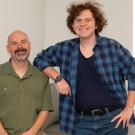
UC Davis fourth-year neurobiology, physiology and behavior major Rogelio Castillo did not expect undergraduate research to open a path for him to create change in his community.  His family’s past experiences with rushed and impersonal medical care led him to turn to science to ask the questions that improve both health outcomes and quality of patient-provider relationships. 

Regeneration for the Next Generation

Fourth-year biological sciences major and Barry Goldwater Scholar recipient Azucena Virgen studies the regenerative biology of Hydra — a freshwater organism known for its ability to regrow entire body parts — at the UC Davis Juliano Lab. What began as a fascination in a high school biology class in her hometown of Woodland, California, grew into a long-term goal to lead a research lab

Donor-Supported Awards Give Undergrads Summer of Research Experiences

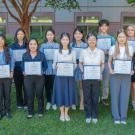
Each year, the CBS Dean’s Summer Undergraduate Research Program (SURP) supports students who wish to stay on campus—and in the lab—over the summer term.

Normally, undergraduates leave campus for the summer if they are not enrolled in classes. They often do this to work and save funds for the start of the next academic year. SURP consists of several different donor-funded undergraduate research awards and allows students to continue their research projects over the summer.

Newly Recognized Pathway Could Protect People with Diabetes from Hypoglycemia

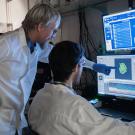
A new study by the University of California, Davis, shows how cells work together to avoid a sudden drop in blood sugar. Understanding these feedback loops could improve the lives of people with diabetes and help them avoid dangerous hypoglycemia.

The work was published Sept. 16 in Proceedings of the National Academy of Sciences

Landmark Discovery Reveals How Chromosomes Are Passed From One Generation to the Next

When a woman becomes pregnant, the outcome of that pregnancy depends on many things — including a crucial event that happened while she was still growing inside her own mother’s womb. It depends on the quality of the egg cells that were already forming inside her fetal ovaries. The DNA-containing chromosomes in those cells must be cut, spliced and sorted perfectly. In males, the same process produces sperm in the testes but occurs only after puberty.