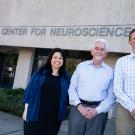
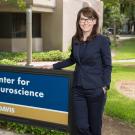
Working out of the UC Davis Center for Neuroscience, Kathryn Prendergast studies how viral infection during pregnancy leads to an increased risk of offspring developing autism spectrum disorders or schizophrenia.
At the UC Davis Center for Neuroscience, researchers collaborate in state-of-the-art facilities to find solutions to help treat, prevent and cure brain conditions, like schizophrenia, autism, depression and Alzheimer’s disease, among others.
Mental health research at the University of California, Davis, has received dedicated endowed support thanks to Bryan Cameron ’80, director of research and senior vice president at Dodge & Cox Investment Managers.
The Center for Neuroscience at the University of California, Davis, presents its annual NeuroFest, 12:30 to 5 p.m. Saturday, March 14, inviting the public to put their mind and senses to work learning about research into better treatments and cures for mental disorders.
Professor Cameron Carter and Associate Professor Li Tian have been appointed as co-directors of the UC Davis Cannabis and Hemp Research Center by Vice Chancellor for Research Prasant Mohapatra.
Assistant Professor Rishidev Chaudhuri is a new faculty member who holds appointments in the Department of Neurobiology, Physiology and Behavior and the Department of Mathematics. His research spans the field of neuroscience, from exploring theoretical principles of neural computation to analyzing large neural datasets.
UC Davis Center for Neuroscience Director Kimberley McAllister studies the puzzle of the developing brain. Part of her research focuses on why viral infection during pregnancy can increase the likelihood of a child developing autism and schizophrenia.
As a cognitive neuroscientist, Professor Charan Ranganath studies memory and learning, exploring the intricacies of the mind. But outside of the lab, the UC Davis researcher trades the EEG cap for an electric guitar.
As healthcare professionals, pharmaceutical companies, patients and families grapple with the opioid crisis, researchers are rushing to design safer opioids. Center for Neuroscience Associate Director Jennifer Whistler believes drug development is headed in the wrong direction when it comes to opioids. Her solution: design a better drug that mimics the body's natural pain reliever, endorphin.