Thanks to a roughly 5-year, $850,000 CAREER grant from the National Science Foundation, Assistant Professor Gerald Quon will develop next-generation computational tools that will allow researchers to better understand and analyze single-cell genomic data.
Assistant Professor Rachael Bay was recently selected as a 2019 Alfred P. Sloan Research Fellow in Ocean Sciences. She'll use the funding to further her research on thermal tolerance in corals.
Assistant Professor Patrick Shih was recently selected as a 2019 Alfred P. Sloan Research Fellow in Computational and Evolutionary Molecular Biology. The fellowship will help fund his research to reconstruct the evolution of photosynthesis.
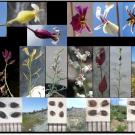
Determining how the planet’s plants will respond to changing environments is a monumental task, but thanks to a grant from the NSF, Assistant Professor Jennifer Gremer and colleagues will investigate how environmental factors influence the germination of California wildflowers.
Rachael Bay and colleagues will investigate how the Willow Flycatcher deals with rapid environmental change, with the goal of linking physiology, morphology and genomics to create a comprehensive map of the species’ adaptation.
Researchers at UC Davis and the University of Alberta, Canada, have made preliminary discoveries about how Zika and hepatitis C viruses reproduce at the cellular level, providing new insight into a family of viruses that also includes West Nile and dengue.
At the 57th Annual Meeting of the Phytochemical Society of North America (PSNA), Philipp Zerbe received the PSNA/Elsevier Young Investigator’s Award for his work.
With a grant from the National Science Foundation, Assistant Professor Celina Juliano will help develop genomic tools that will promote regenerative research and hopefully increase the number of researchers using Hydra as a model system.
Pew Charitable Trusts has announced Kassandra Ori-McKenney as a 2018 Pew Biomedical Scholar, one of the most prestigious honors of its kind. With a four-year grant totaling $300,000, Ori-McKenney will investigate the role of a protein called tau in the development of neurodegenerative disease related to traumatic brain injury.