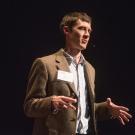
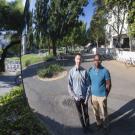
Mechanical and aerospace engineering (MAE) professor Steve Robinson, assistant professor Jonathon Schofield, and Neurobiology, Physiology and Behavior (NPB) associate professor Wilsaan Joiner are teaming up in a new four-year, $1.3 million NASA-funded project to study different visual and haptic strategies to help astronauts more safely and precisely operate ro
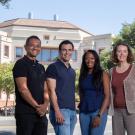
A $1.5 million grant from the United States Department of Defense (DoD) will help UC Davis Professor Lee Miller, Department of Neurobiology, Physiology and Behavior and the Center for Mind and Brain, expand his lab’s research on hearing loss, an issue of relevance to both aging populations and military personnel.
UC Davis Assistant Professor Lucas Smith was selected by The Hartwell Foundation to receive the prestigious 2019 Hartwell Individual Biomedical Research Award. The award will support Smith’s research on finding promising therapies that can improve mobility and quality of life for children with cerebral palsy.
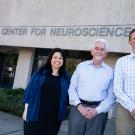
At the UC Davis Center for Neuroscience, researchers collaborate in state-of-the-art facilities to find solutions to help treat, prevent and cure brain conditions, like schizophrenia, autism, depression and Alzheimer’s disease, among others.
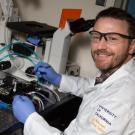
The popular painkiller ibuprofen may have more significant effects on the liver than previously thought, according to new research from the University of California, Davis. The study in laboratory mice also shows marked differences between males and females.
A team of UC Davis researchers look to give humanity an extra hand—literally. A new, NSF-funded collaboration between the Departments of Mechanical and Aerospace Engineering (MAE) and Neurobiology, Physiology and Behavior (NPB) plans to develop and test a robotic fifth limb to give humans extra capabilities in extreme environments.
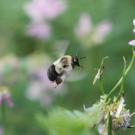
Bumblebees are the big lifters of the insect world, able to fly back to the hive with almost their own body weight in nectar on board. A study published Feb. 5 in Science Advances shows how they do it — and that bees can show more flexibility in behavior than you might expect from a bumbling insect.
UC Davis College of Biological Sciences neuroscientists like Wilsaan Joiner and Jochen Ditterich are exploring new ways to understand how our brains make sense of our perceptions, in hopes to help diagnose and fight debilitating conditions like schizophrenia and bipolar disorder.
From genes to the gym, Professor of Molecular Exercise Physiology Keith Baar studies exercise. In this listicle, Baar walks us through five things you might not know about exercise.
This fall, the College of Biological Sciences will launch the Advancing Diversity in Neuroscience Research (ADNR) Program to help grow diversity in biomedical, behavioral and clinical neuroscience research professions.