Did you know that more than 26 million Americans have had a personal genomics test performed? And within the next two years, the number is expected to grow rapidly. As genomic testing becomes more common, you might wonder what the implications are for your future. Perhaps you’ve had a genetic test performed or plan to do one soon. What should you expect? And what should you be cautious about?
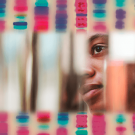
Professor Graham Coop and postdoctoral researcher Michael “Doc” Edge, both of the Department of Evolution and Ecology, warn that these “direct to consumer” DNA testing services could be vulnerable to a sort of genetic hacking.
In a study published today in the journal Scientific Reports, scientists from the University of California, Davis, and the California Department of Fish and Wildlife use two decades of kelp ecosystem monitoring data to chronicle the catastrophic shift in 2014 from a robust bull kelp forest to a barren of purple sea urchins.
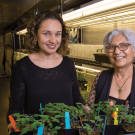
Last year, Associate Professor Siobhan Brady and her colleagues published “a core set of genes that are critical in nitrogen metabolism” in Nature. For her research, Brady was recognized with the 2018-2019 College of Biological Sciences Faculty Research Award.
In December 2018, Distinguished Professor Venkatesan Sundaresan and his colleagues published in Nature a method that allowed them to produce clonal seeds directly from plants, bypassing the sexual reproduction process. Replicating this process in the lab could prove vital to providing the world’s farmers with high-yielding, disease-resistant or climate-resistant food crops.
For nearly two decades, Professor Julin Maloof has shined a light on biological knowledge for UC Davis students, introducing computational methods to the life sciences curriculum. For his dedication to his students, Maloof received the 2018-2019 Faculty Teaching Award.
As director of the Coastal and Marine Sciences Institute, Richard Grosberg oversees an interdisciplinary body that includes membership from the College of Biological Sciences, the College of Agricultural and Environmental Sciences, the College of Letters and Science, the College of Engineering, the School of Law, the School of Veterinary Medicine and the Graduate School of Management.
Of the major food crops, only rice is currently able to survive flooding. Thanks to new research, that could soon change -- good news for a world in which rains are increasing in both frequency and intensity.
A new study from the Genome Center at the University of California, Davis, shows that many odiferous compounds from a male cat are actually made not by the cat, but by a community of bacteria living in the anal sacs.
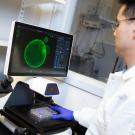
Assistant Professor Chang-il Hwang, Department of Microbiology and Molecular Genetics, studies pancreatic cancer, one of deadliest cancers. Learn more about how Hwang and his lab colleagues are fighting pancreatic cancer with the help of organoids.