Research Stories

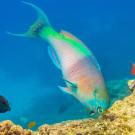
Corals Saving Corals

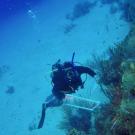
Under the right living arrangement, disease-resistant corals can help “rescue” corals that are more vulnerable to disease, found a study from the University of California, Davis, that monitored a disease outbreak at a coral nursery in Little Cayman, Cayman Islands. 

Biodiversity Genomics Europe Aims to Reverse Biodiversity Loss

UC Davis is a collaborating partner in a new European effort to use DNA data to characterize and conserve life on Earth. The Biodiversity Genomics Europe consortium, launched Sept. 26, is affiliated with the Earth BioGenome Project, which has its administrative headquarters at UC Davis. Harris Lewin, distinguished professor of evolution and ecology at UC Davis, chairs the EBP Working Group.

Study Identifies Key Mechanism for Protein Trafficking in Plants and Bacteria

Plants photosynthesize to survive, and bacteria divide to reproduce, but to accomplish these necessary biological functions, the cells of these organisms employ protein trafficking. More specifically, these functionalities, among many others, rely on the twin-arginine translocation (Tat) pathway, which, when properly functioning, allows for the transportation of proteins across cellular membranes.

Single-protein Images Show How E. coli Repairs DNA While Replicating It

The success of E. coli bacteria depends on their ability to multiply very rapidly by dividing into new cells. The bacteria can divide as quickly as they can make an entire new copy of their DNA while minimizing errors. New work from researchers at the University of California, Davis College of Biological Sciences answers a key question about how E. coli fixes damage to DNA in the middle of duplicating it.

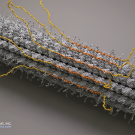
Understanding Growth Regulation by Protein Degradation in Trees for Bioenergy

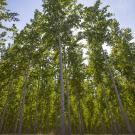
The U.S. Department of Energy is funding a project at the UC Davis College of Biological Sciences to study the function of genes that regulate growth and wood formation in poplar trees. The three-year, $2.5 million project is led by Nitzan Shabek, assistant professor in the UC Davis Department of Plant Biology together with Andrew Groover at the USDA Pacific Southwest Research Station in Davis and Justin Walley, Iowa State University.

Understanding Healthy Function of Tau, Protein Associated with Dementia

In Alzheimer’s disease and other neurodegenerative dementias, proteins that normally play a role in healthy brain tissue turn bad, clumping together to form insoluble plaques and tangles as neurons wither and die. Exactly how these proteins are connected to disease — and whether they can be targeted in some way to slow, stop or reverse its progression — remains a challenging problem.

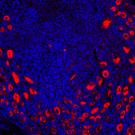
Study Reveals How the Ovarian Reserve is Established

Fertility is finite for mammalian females. From birth, females possess a limited number of primordial follicles that are collectively called the ovarian reserve. Within each follicle is an oocyte that eventually becomes an egg. But with age, the viability of the ovarian reserve decreases.

“Despite its fundamental importance, our understanding how the ovarian reserve is established and maintained remains poor,” said UC Davis Professor Satoshi Namekawa, Department of Microbiology and Molecular Genetics.