Research Stories

Improving Prosthetic Limbs for Children

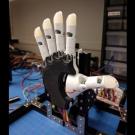
Wilsaan Joiner, an associate professor in neurobiology, physiology and behavior and Jonathon Schofield, an associate professor in mechanical and aerospace engineering, and colleagues, are working to develop better and more functional prosthetic devices for children.

Breeding Plants With Genes From 1 Parent

Scientists are a step closer to breeding plants with genes from only one parent. New research led by plant biologists at the University of California, Davis, published Nov. 19 in Science Advances, shows the underlying mechanism behind eliminating half the genome and could make for easier and more rapid breeding of crop plants with desirable traits such as disease resistance.

Study Highlights Molecular Targets Integral to Breast Cancer Treatment

It’s estimated that over 281,000 women in the U.S. will be diagnosed with breast cancer this year, according to the National Cancer Institute. And about one in seven women will receive a breast cancer diagnosis in their lifetime.

For those with breast cancer gene 2 (BRCA2) mutations, the risk of developing breast cancer is much higher. Between 45 and 69 percent of those with this genetic mutation will develop breast cancer by 70 to 80 years of age. 

Researcher Studying the Microbiome and Chemical Communication of Cats Named a Chancellor’s Postdoctoral Fellow

There are myriad ways to view the world. Some people view it through the lens of art, others through the lens of anthropology or psychology. But Connie Rojas views the world through the lens of biology.

“Everything around you—the tree outside, how tall it is, the bark—everything makes sense  when viewed through the lens of biology,” said Rojas, who was selected to join UC Davis this year as a 2021-2022 Chancellor’s Postdoctoral Fellow. “That type of thinking was very intuitive for me growing up.” 

A Map of Mouse Brain Metabolism in Aging

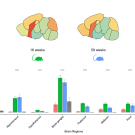
The first atlas of metabolites in the mouse brain has been published by a team led by UC Davis researchers. The dataset includes 1,547 different molecules across 10 brain regions in male and female laboratory mice from adolescence through adulthood and into advanced old age. The work is published Oct. 15 in the Nature Communications. The complete dataset is publicly available at https://mouse.atlas.metabolomics.us/.

Assistant Professor Gerald Quon Receives NIH New Innovator Award

Gerald Quon, an assistant professor in the Department of Molecular and Cellular Biology and the Genome Center, has received a New Innovator Award from the National Institutes of Health (NIH). The award will support the development of a computational framework for characterizing how genetic variants associated with the risk of psychiatric diseases like schizophrenia and bipolar disorder work at the at the cellular level.

Hippocampus Is the Brain’s Storyteller

People love stories. We find it easier to remember events when they are part of an overarching narrative. But in real life, the chapters of a story don’t follow smoothly one from another. Other things happen in between. A new brain imaging study from the Center for Neuroscience at the University of California, Davis, shows that the hippocampus is the brain’s storyteller, connecting separate, distant events into a single narrative. The work is published Sept. 29 in Current Biology.

Researchers Identify a Potentially Safer Approach to Opioid Drug Development

Opioids are powerful painkillers but their use is hindered because patients become tolerant to them, requiring higher and higher doses, and overdoses can cause respiratory depression and death. A recent study from researchers at the UC Davis Center for Neuroscience contradicts existing thinking about how opioid drugs cause tolerance and respiratory depression, and suggests a new, balanced approach to developing safer analgesics. The work was published July 13 in Neuropsychopharmacology.

Why Sunflowers Face East

Sunflowers face the rising sun because increased morning warmth attracts more bees and also helps the plants reproduce more efficiently, according to a study by researchers at the University of California, Davis. The results were published Aug. 9 in New Phytologist.

“It’s quite striking that they face east,” said Stacey Harmer, professor of plant biology in the UC Davis College of Biological Sciences and senior author on the paper. “It’s better for them to face east, as they produce more offspring.”

Evolutionary Thinking

We watch a ball as it falls into our glove. We hear a strange sound in another part of the house and listen intently. In neuroscience, the act of narrowing our senses in response to an environmental event is called “attention,” and it is understood that when we attend to a stimulus, we lose the ability to focus on other surrounding inputs.